
"Santo Domingo region"
300 article(s) found

A brief introduction to the origin, development, history and culture of Santo Domingo boutique coffee beans with excellent acidity
The temperate climate in Dominica is conducive to coffee cultivation, and the best places to grow coffee are the Barahona region in the southwest and the Cibao Valley north of Santiago, Dominica's second largest city. The northern region, represented by Hibao, and the southern region, including Okayabani Santo Domingo, produce good coffee. Among them, Santo

Introduction to the characteristics of Dominica Coffee Flavor and taste Manor
In 1677, about 4,000 French lived in 11 villages in the west of the island. In 1697, France and Spain ceded the western part of the island to France according to the Leswick Treaty of the Alliance War, formally recognizing French sovereignty over Haiti in the western part of the Spanish island, and the eastern part of the Spanish island was called East Santo Domingo. France continues to develop its agricultural economy on the island of Hispaniola.

Fresh and elegant Santo Domingo fine coffee beans grinding degree roasting degree processing method
Dominican coffee is graded in AA, AB, etc. size, but coffee rules such as Siwao and Barahona are also classified as top quality. Both coffees are harvested in February to May and are washed. Such flavor characteristics are not only related to varieties and planting soil quality, but also closely related to the picking and processing methods of raw beans.

Santo Domingo coffee beans, coffee beans
To trace the origins of Tibica, we must first talk about the coffee tree originally planted in Martinique. These trees were planted by Dominicans as far back as the early 18th century, so Dominica began growing coffee as early as that time. For a time, the Caribbean was almost synonymous with coffee production, but in recent years Cuba, Haiti and other producing areas have been severely damaged by Hurricane George and have since changed.

The Dominican region produces Santo Domingo coffee in the south.
Unlike coffee produced in Haiti, most of the coffee grown in the Dominican Republic has been washed, which is a symbol of high quality. Miniga Coffee uses a washing method to treat coffee beans, so that the quality of treated coffee beans is more guaranteed. The coffee beans treated by washing method retain more original flavor than the drying method, and the aroma is pure and soft. Carefully selected and made in this way
A brief introduction to the Market Price of Santo Domingo Fine Coffee Bean varieties with intertwined aftertaste
Dominica coffee is mainly produced in areas such as Cibao in the Central Mountains, the Caribbean and Barahona. There are many large estates in Siwao, and coffee trees are planted with 75% Kaddura and 25% Tibica. In terms of varieties, Baraona is the region with a high proportion of Tibika seeds.

High quality Dominican coffee variety Santo Domingo coffee
In the early 18th century, coffee was introduced to Domiga from Martinique, and fine coffee was produced in the north represented by Hibao and in the south, including Okayabani Santo Domingo. Among them, the coffee produced by Santo Domingo and Barney, which is almost synonymous with domiga coffee, is a world-famous high-quality coffee. Santo Domingo coffee, which is characterized by freshness and elegance,

Introduction to the characteristics of Dominican Santo Domingo Coffee Flavor Manor
In 1795, France and Spain signed the Basel Peace Treaty in Switzerland, agreeing to cede the Santo Domingo area in the eastern part of the island of Dominica to France, making the Spanish island a complete French colony. Six years later, Toussaint Lovidur, a black Haitian, led other black slaves to revolt against French rule and captured Santo Domingo in 1801.

Dominica Santo Domingo Coffee with a faint fragrance; an introduction to the characteristics of the manor area
In 1700, the Bourbon dynasty replaced the Habsburg dynasty in Spain. The new dynasty introduced some economic reforms. Trade in Santo Domingo began to flourish. [3] French rule (1795-1809) in 1795, France and Spain signed the Basel Peace Treaty in Switzerland, agreeing to cede the Santo Domingo area in the eastern island of Dominica to France.

Santo Domingo Coffee Estate Breed Flavor Introduction
Western Hispaniola, harvested in the mountains above 1500 meters, full grain coffee The Dominican Republic and Haiti are neighbors, and both have Hispaniola. The best production site is Barahona in the southwest, but Juncalito and Ocoa are also

Introduction to the fresh and elegant growing environment of Dominican boutique coffee beans
In 1677, about 4,000 French lived in 11 villages in the west of the island. In 1697, France and Spain ceded the western part of the island to France according to the Leswick Treaty of the Alliance War, formally recognizing French sovereignty over Haiti in the western part of the Spanish island, and the eastern part of the Spanish island was called East Santo Domingo. France continues to develop its agricultural economy on the island of Hispaniola.

Santo Domingo coffee
Santo Domingo is a city with a history of 500 years. Coffee produced by Santo Domingo and Barney, which is almost synonymous with Domiga coffee, is a world-famous high-quality coffee. Its flavor and taste characteristics: fresh and elegant, full particles, excellent acidity, pleasant aroma. The Dominican Republic is located in the east of the island of Haiti in the West Indies, bordering the Republic of Haiti in the west and the Atlantic Ocean in the north.

Description of flavor, taste and aroma characteristics of pure and soft Santo Domingo boutique coffee beans
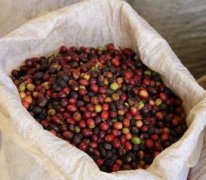
Such flavor characteristics are not only related to varieties and the quality of planting soil, but also closely related to the picking and handling of raw beans. Coffee in Dominica is selected by the manual method with the highest cost, and workers mainly consider the fullness of coffee granules, and the other is to see whether they are even. according to these conditions, the coffee beans with the fullest and most uniform particles are graded.

A brief introduction to the History and Culture of the Origin and Development of Santo Domingo Coffee
Unlike coffee produced in Haiti, most of the coffee grown in the Dominican Republic has been washed, which is a symbol of high quality. Miniga Coffee uses a washing method to treat coffee beans, so that the quality of treated coffee beans is more guaranteed. The coffee beans treated by washing method retain more original flavor than the drying method, and the aroma is pure and soft. Carefully selected and made in this way

Smooth and smooth coffee producing area of Santo Domingo, Dominica introduces Santo Domingo Coffee Manor
The earliest coffee in Dominica was introduced from Martinique (the overseas province of France), dating back to the early 18th century. Dominica is an island country with a tropical climate. The temperature changes little throughout the year. Except for the lower temperature in the Central Cordillera Mountains, which can reach less than 0 ℃ in winter, the annual average temperature in other areas is between 25 and 30 ℃, which is affected by the mountain topography.

A brief introduction to the origin, development, history and culture of pure and gentle Santo Domingo boutique coffee beans
Such flavor characteristics are not only related to varieties and the quality of planting soil, but also closely related to the picking and handling of raw beans. Coffee in Dominica is selected by the manual method with the highest cost, and workers mainly consider the fullness of coffee granules, and the other is to see whether they are even. according to these conditions, the coffee beans with the fullest and most uniform particles are graded.

Fresh and elegant Santo Domingo boutique coffee bean cultivation geographical location, climate, good altitude
Carefully selected in this way, the high-quality Dominican coffee exudes a faint aroma and gives people a faint fruity aroma with a lingering finish and a smooth and smooth finish. To trace the origin of Tibica, we should first talk about the coffee trees originally planted in Martinique. These trees were planted by Dominicans as far back as the early 18th century, so Dominica began at that time.

A brief introduction to the market price of fresh and elegant Santo Domingo boutique coffee beans
To trace the origin of Tibica, we should first talk about the coffee trees originally planted in Martinique. These trees were planted by Dominicans as far back as the early 18th century, so Dominica began growing coffee as early as that time. For a time, the Caribbean was almost synonymous with coffee production, but in recent years Cuba, Haiti and other producing areas have been severely damaged by Hurricane George.

A brief introduction to the origin, development, history and culture of Santo Domingo boutique coffee beans
To trace the origin of Tibica, we should first talk about the coffee trees originally planted in Martinique. These trees were planted by Dominicans as far back as the early 18th century, so Dominica began growing coffee as early as that time. For a time, the Caribbean was almost synonymous with coffee production, but in recent years Cuba, Haiti and other producing areas have been severely damaged by Hurricane George.

A brief introduction to the planting Market Price of Santo Domingo Fine Coffee Bean varieties
Coffee in Dominica is graded in sizes such as AA and AB, but it is classified as top grade by coffee from highlands such as Sivao and Baraona. Both kinds of coffee are harvested from February to May and are refined by washing. Turning to the introduction of Dominican coffee, the most distinctive features are fresh and elegant, full of particles, excellent acidity and pleasant flavor.